History of Fife: The Kingdom Between Two Firths
Fife Travel Guide: The Kingdom Between Two Firths
The Kingdom of Fife: An Introduction
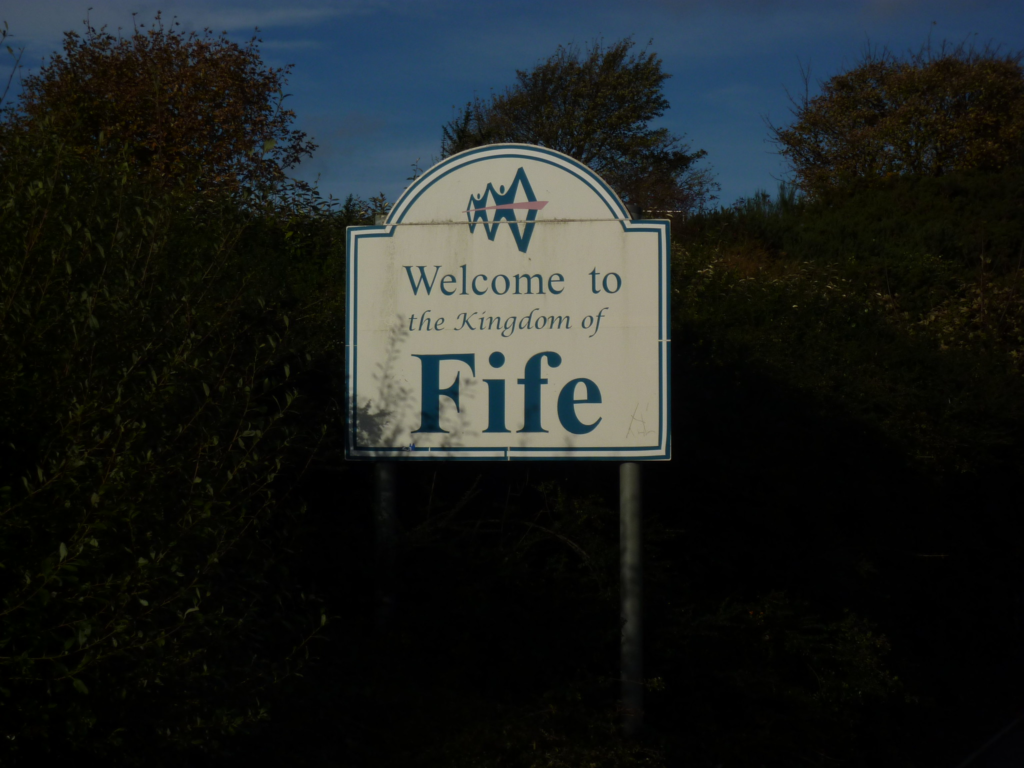
There are places that appear on maps, and there are places that live in memory. Fife belongs firmly to the second category. To speak of Fife merely as a county of eastern Scotland is to miss its character entirely. For over a thousand years it has been called “The Kingdom of Fife,” and unlike many old titles, this one was not given lightly.
Bound by the Firth of Forth to the south and the Firth of Tay to the north, Fife occupies a peninsula of roughly 500 square miles—fertile land, fishing villages, royal burghs, industrial towns, and ancient sacred ground. Its eastward-pointing shape has long made it a natural crossroads between the Scottish Lowlands and the North Sea world beyond. To understand Scotland, one must first understand Fife.
Before the Scots: The Land of the Picts
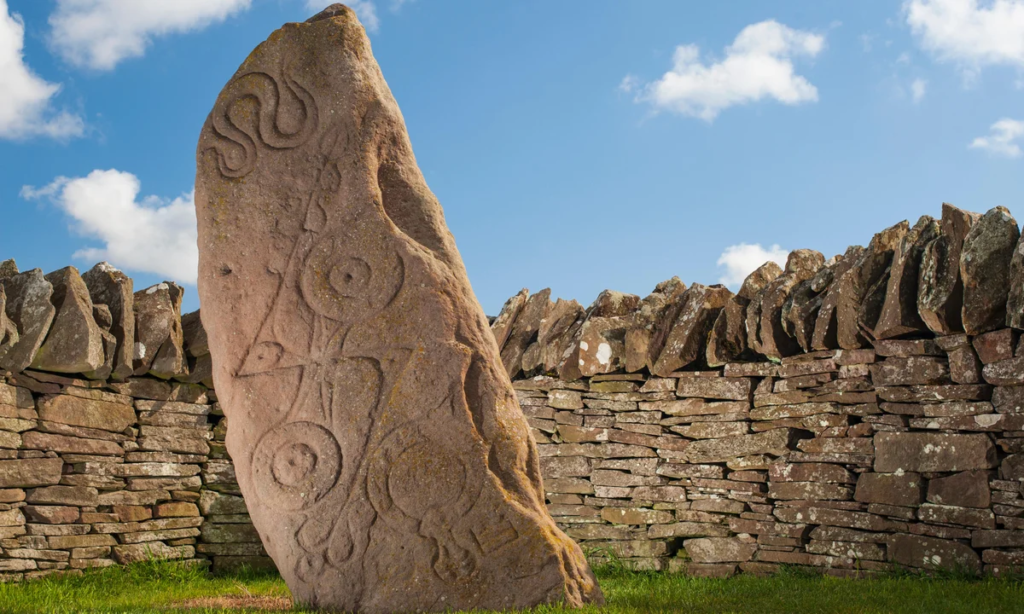
Long before kings rode through its valleys, Fife belonged to the mysterious Picts, whose carved stones still stand across the region as silent witnesses to a world that left few written records. The name “Fife” itself may derive from the Pictish Fib, a name appearing in early king‑lists as one of the seven original Pictish provinces.
Near Aberdour, Lundin Links, and inland around Cupar, archaeologists have uncovered traces of settlements that predate Roman Britain. At Norman’s Law, north of Cupar, an Iron Age hill fort still shows defensive ramparts over 2,000 years old. Though the Romans marched north under Agricola and later Severus, they never truly conquered this land. Roman pottery and coin finds at sites like Newburgh suggest trade, not occupation. Fife remained stubbornly itself.
The Picts ruled here from roughly the 3rd to 9th centuries, and some historians—including old scholars like myself—have long suspected that Fife was not merely occupied by them but may have been one of their political heartlands. The St Andrews Sarcophagus, a masterpiece of early medieval carving discovered in the cathedral grounds, depicts Biblical scenes with distinct Pictish iconography. When Kenneth mac Alpin united Picts and Scots in the 9th century, Fife did not vanish; it became the bridge between two peoples.
Saints, Relics, and the Birth of a Spiritual Capital
No story of Fife can begin in earnest without Saint Andrew.
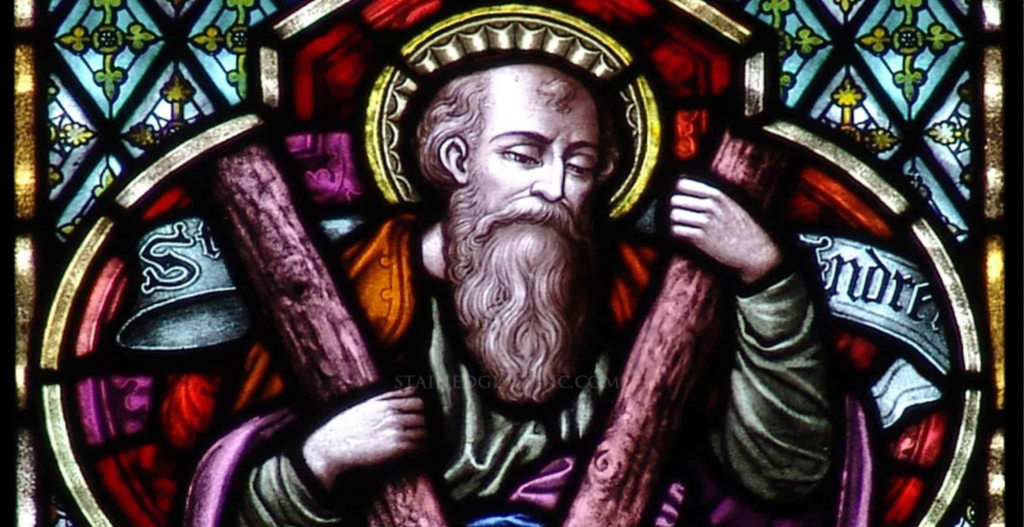
Tradition tells us that in the 8th century (or possibly the 9th, for records are as fickle as the North Sea wind), relics of Saint Andrew—a few bones, a tooth, perhaps a kneecap—were brought from the Mediterranean world to the east coast of Fife by a monk named Saint Rule, also known as Regulus. Whether every detail is factual matters less than what followed.
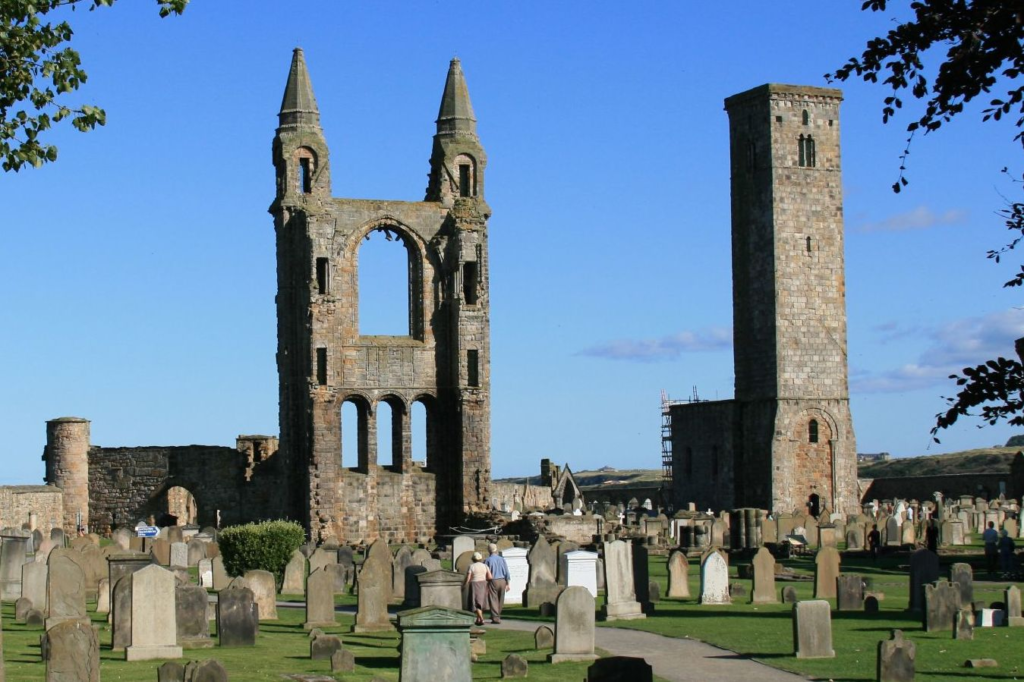
Around these relics grew St Andrews. First a small church, then a priory, then a bishopric. By the 12th century, the great St Andrews Cathedral dominated the skyline, the largest church ever built in Scotland—some 390 feet in length. Pilgrims came from across Europe, following routes marked by hospices and way‑chapels. Kings knelt here: Kenneth II, David I, Robert the Bruce (who had already killed the Red Comyn in Dumfries but sought absolution nonetheless). Bishops, especially the formidable Bishop William Wishart (1273–1279), wielded influence that rivalled noble houses.
The cathedral took over 150 years to complete and was consecrated in 1318 in the presence of Robert the Bruce himself. Even now, when the sea mist rolls across the cathedral ruins at dawn—the east gable still standing against the sky—one can almost hear the footsteps of pilgrims on the stones. The adjacent St Andrews Castle, partly destroyed and rebuilt during the Wars of Independence, housed bishops who lived more like warlords than holy men.
The Kingdom of Fife
Why “kingdom”?
The answer lies in the early medieval rulers who treated Fife as a distinct province of exceptional importance. Its Mormaers—later Earls—held unusual privileges in Scottish coronations. According to tradition, recorded by chroniclers like John of Fordun, the Earl of Fife had the right to place the king upon the Stone of Destiny during inauguration ceremonies at Scone.
This was no ceremonial trifle. It placed Fife at the very centre of Scottish sovereignty. When the king‑making rite required the king to be “led to the throne through the kindred of Fife,” no Gaelic or Scots lord could ignore that authority.
When Robert the Bruce fought for Scotland’s independence in the early 14th century, Fife was a contested prize. Its castles—Crail, Cupar, Leuchars, and above all St Andrews—changed hands more than once. The English garrison at Cupar Castle burned in 1307 during Bruce’s guerrilla campaign. Fife’s earl, Donnchadh IV, eventually sided with Bruce, but not before years of pressure. The kingdom-within-a-kingdom survived the wars, and the title “Earl of Fife” remained potent enough that Robert II granted it to his own son in the late 14th century.
Royal Burghs and Medieval Trade
By the High Middle Ages, Fife was thriving.
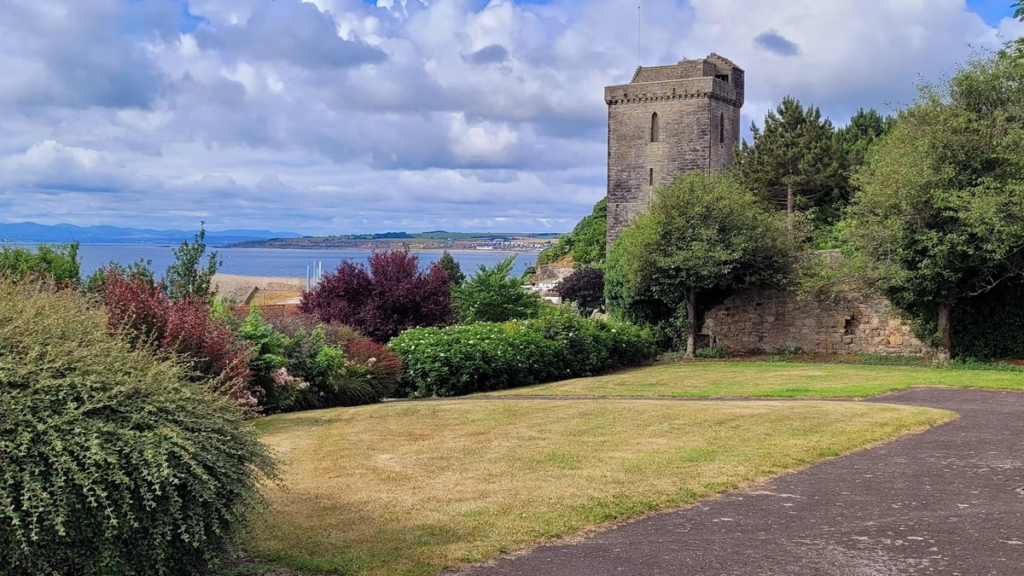
Ports such as Crail, Anstruther, Pittenweem, and Dysart traded fish, salt, wool, and grain with the Low Countries and Scandinavia. Crail received its royal burgh charter from Robert the Bruce in 1306. These towns were granted rights to hold weekly markets and annual fairs—a royal favour that brought customs revenue to the crown and legal privileges to burgesses.
The East Neuk, as it became known (from the Scots neuk meaning “corner” or “nook”), was outward-looking long before globalisation had a name. Ships from Anstruther carried cured haddock and whitefish to Bruges and Hamburg, returning with timber, wine, and Spanish iron. By the 15th century, the Fife coast had become Scotland’s richest fishing economy, with the “Craws Nest” at Pittenweem serving as a storage cellar hewn directly from the rock.
Fishing shaped not only the economy but the language, customs, and architecture of these communities. To this day, the narrow wynds and crow-stepped gables tell their own stories. There is a Fife saying: “Ane fisher never lies, except when his nets are empty.” The mercat crosses in each town still stand where fishwives once sold their catches in thick Scots voices.
Reformation and Intellectual Change
In the 16th century, Fife stood at the centre of one of Scotland’s most profound transformations.
It was in St Andrews that the Protestant reformer George Wishart was executed in 1546—burned at the stake outside the castle walls while Cardinal Beaton watched from a window. Within months, a group of Protestant lairds murdered Beaton in revenge and held St Andrews Castle for over a year, until a French fleet arrived to dislodge them.
And it was here that John Knox found inspiration for the movement that would reshape Scottish religion, education, and politics. Knox had served as Wishart’s bodyguard, carrying a two‑handed sword to protect his mentor. After Wishart’s death, Knox joined the castle garrison, was captured by the French, and spent nineteen months as a galley slave on the Loire. Upon his release, he went to Geneva, learned from Calvin, and returned to lead the Scottish Reformation of 1560.
The old cathedral’s decline mirrored the old church’s decline. After the Reformation, the magnificent cathedral was systematically stripped of altars, statues, and stained glass. By 1561, it had become a source of building stone for the town. Today, only the east gable and the standing ruins of the Augustinian priory remain—but they remain with a strange, melancholic power. St Andrews also gave Scotland its first university in 1413 (the third oldest in the English‑speaking world after Oxford and Cambridge), and that university became a Reformation battleground, with Catholic and Protestant regents debating in the same worn lecture halls.
Coal, Industry, and the Modern Age
By the 18th and 19th centuries, Fife changed again.
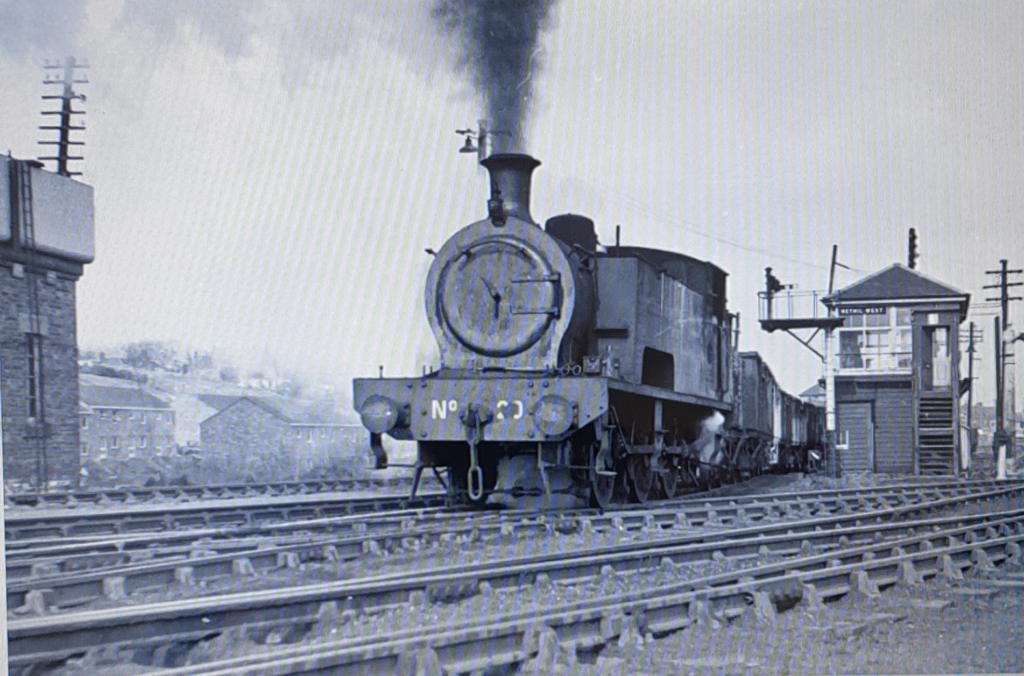
Beneath its fields lay coal seams that would fuel the industrial revolution. The Fife coalfield stretched from the Forth to the Tay, with some seams as thick as fourteen feet. Towns such as Cowdenbeath, Lochgelly, and Methil became centres of mining and heavy industry. At its peak in 1913, the Fife coalfield employed over 30,000 men and produced nearly three million tons of coal annually.
Mining communities developed fierce traditions of solidarity, trade unionism, and political activism that would shape Scottish labour politics for generations. The Fife miners were among the first to join the Miners’ Federation of Great Britain in the 1880s. The 1926 General Strike saw pitched battles between strikers and police in the streets of Cowdenbeath. Later, men like Willie Hamilton (Labour MP for West Fife from 1950 to 1987) carried that mining voice directly to Westminster.
Shipbuilding, linoleum manufacturing in Kirkcaldy, and engineering transformed what had once been a largely rural kingdom. Michael Nairn & Company began producing floorcloth in 1847 and became the world’s largest linoleum manufacturer, exporting to the United States and Australia. Kirkcaldy also gave Scotland one of its greatest thinkers: Adam Smith, author of The Wealth of Nations (1776), whose ideas reshaped the modern world. Smith was born in Kirkcaldy in 1723, attended the burgh school, and wrote much of his great work while living with his mother in the town’s High Street. The local linen and tobacco trade—visible from his window—furnished real examples for his theories on free markets.
Golf and Global Fame
No modern discussion of Fife can avoid golf.
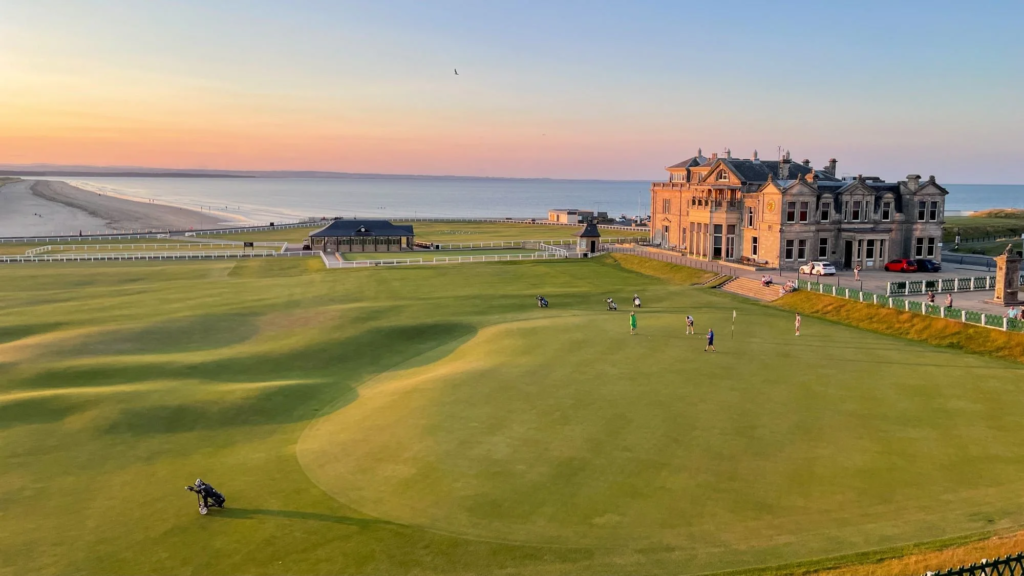
The windswept links of the Old Course at St Andrews are widely regarded as the spiritual home of the game. The first written evidence of golf at St Andrews dates to 1552, but the game was almost certainly played on the links a century earlier. Originally, shepherds and fishermen used curved sticks to hit pebbles around rabbit warrens and sand dunes.
For centuries, golfers have walked those fairways, from local craftsmen to kings, presidents, and champions. Mary, Queen of Scots, famously played on St Andrews links in 1567, only days after her husband’s murder—an act so scandalous that her enemies used it as evidence of moral depravity. The Royal and Ancient Golf Club, founded in 1754, became the worldwide governing body of the sport (except for the United States and Mexico). What began as a local pastime on rough coastal turf became one of Scotland’s greatest cultural exports. The Open Championship has been staged at St Andrews more times than anywhere else, with winners including Jack Nicklaus, Tiger Woods, and Old Tom Morris. Morris, originally from St Andrews, won the Open four times and designed courses across Britain, carrying Fife’s golfing gospel wherever he went.
Fife Today
Today, Fife is many things at once.
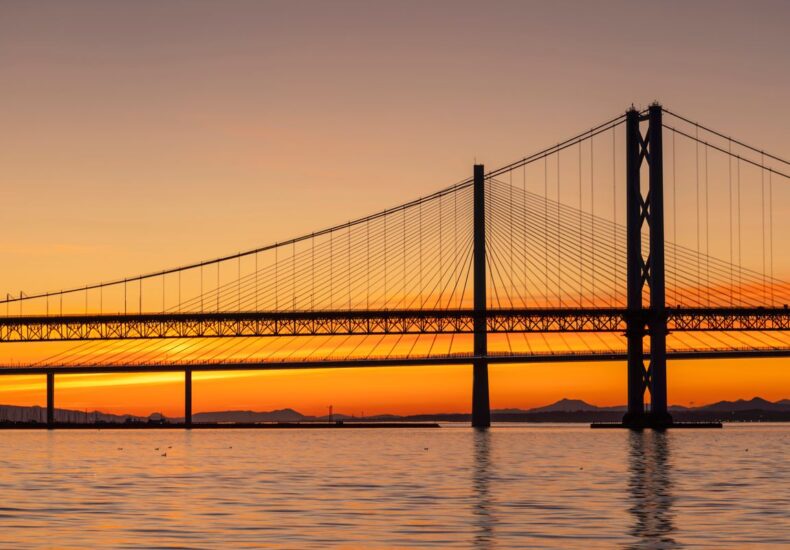
It is university town (St Andrews, with its 9,000 students) and former mining village (Cowdenbeath, now home to a speedway track on the site of an old colliery). It is fishing harbour—Pittenweem still lands prawns and lobsters—and commuter community, with tens of thousands travelling daily across the Forth Road Bridge and the rail bridge to Edinburgh. It is cathedral ruin, golf pilgrimage, wind farm (offshore at the Methil coast), and technology corridor, with the Silicon Glen of microelectronics stretching through Dunfermline and Glenrothes. Historic Dunfermline, once Scotland’s capital under Malcolm III and Queen Margaret, holds Robert the Bruce’s grave in its abbey.
But above all, Fife remains what it has always been: a place with a memory.
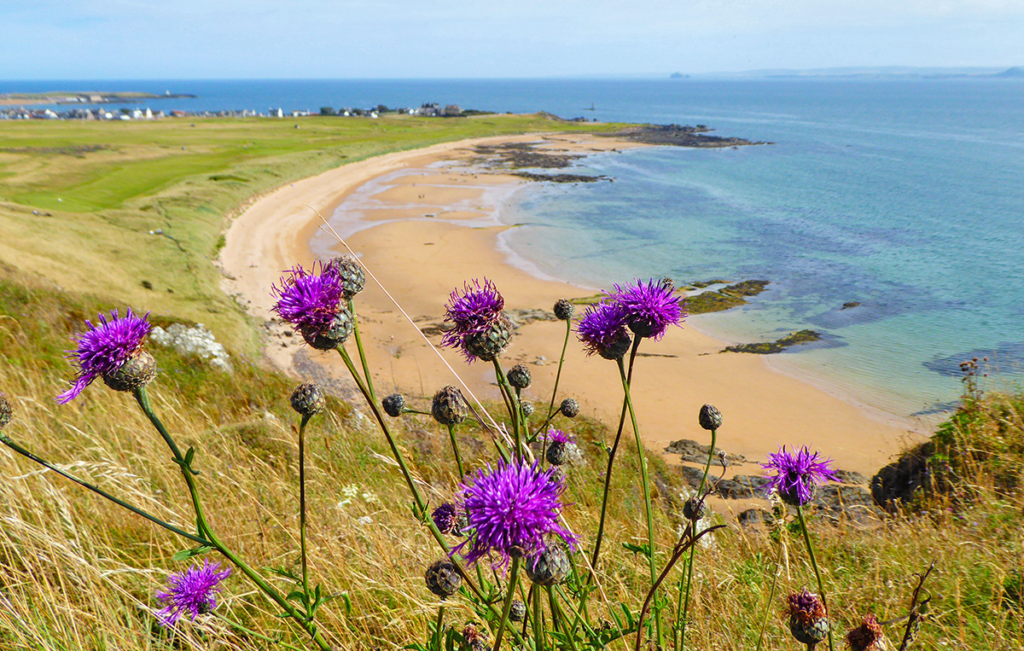
Walk the cliffs of the East Neuk—the Fife Coastal Path runs 117 miles from Kincardine to Newburgh—stand in the shadow of St Andrews Cathedral, or listen to the gulls over North Queensferry. Look across to Edinburgh Castle on the far shore. You are not merely visiting a region.
You are walking through one of Scotland’s oldest kingdoms.
And kingdoms, even when no crown remains, have a way of remembering who they are.
Let me know if you would like any of these additions expanded into a separate sidebar or footnote section, or if you wish to focus deeper on a particular section (e.g., the Pictish stones or the mining strikes).

Great article, very helpful!
As a descendant of the Macduffs and the Earl’s of Fife, I am thankful for this article for it brings clarity to my past and the lineage that I come from besides the Hawaiian Monarchy that I also descend out from. Thank you for this, it is very helpful!